
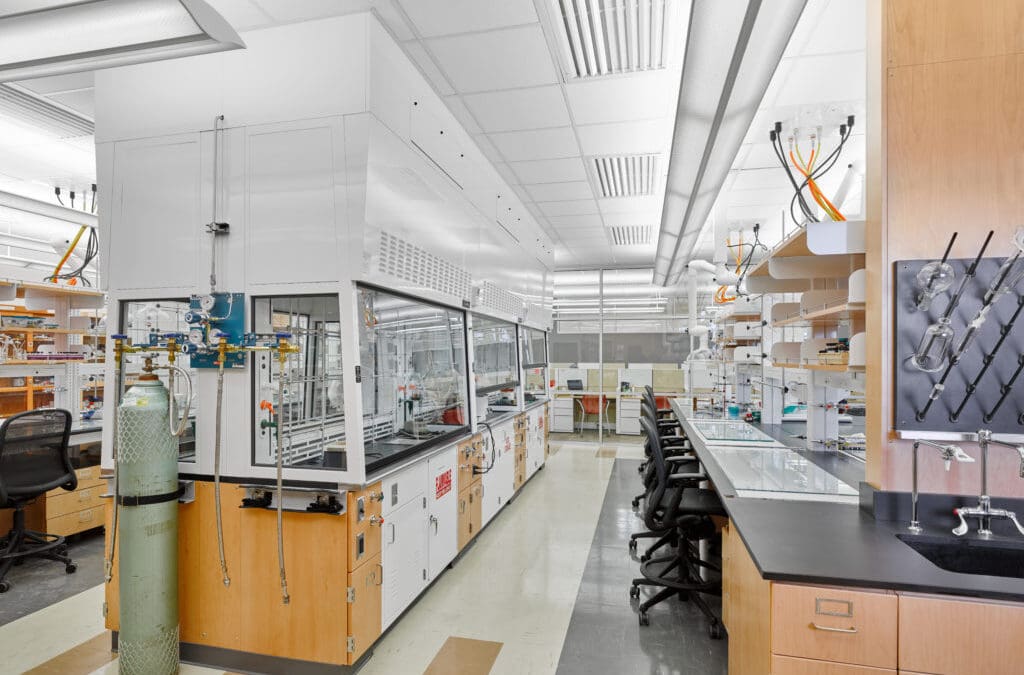
When we think about designing a world-class laboratory, our minds usually go to visible elements like premium casework, ergonomically designed workstations and high performance fume hoods. But at the 25th Lab Design Anniversary Conference, an eye-opening roundtable led by Michael Wesolowsky, PhD, PEng (Principal at Thornton Tomasetti) highlighted an invisible force that can quietly compromise millions of dollars in research: vibration.
Whether from nearby traffic and rail lines or internal sources such as HVAC systems and foot traffic, micro-vibrations are a constant challenge in modern laboratory environments.
Why Labs Are So Sensitive
High end laboratory instruments such as MRI machines, NMR spectrometers and electron microscopes are highly advanced imaging systems that depend on extreme stability. Even microscopic movement between the instrument and the specimen can result in distorted data, loss of calibration and costly downtime.
To manage this, structural engineers rely on vibration criteria curves known as VC curves ranging from VC A through VC G. However as research instrumentation continues to advance into nanometre scale resolution, standard guidelines are often no longer sufficient. Many manufacturers now require highly specific vibration criteria that must be validated before installation.
It Is Not Just About the Machines
Vibration also affects human performance. Depending on direction, whether vertical or horizontal, even small movements can cause fatigue, reduced focus and discomfort for laboratory staff working in precision environments.
A space that appears acceptable in a typical office setting may still introduce enough motion to disrupt sensitive tasks in a laboratory setting. Effective laboratory design must therefore consider both equipment performance and occupant well-being.
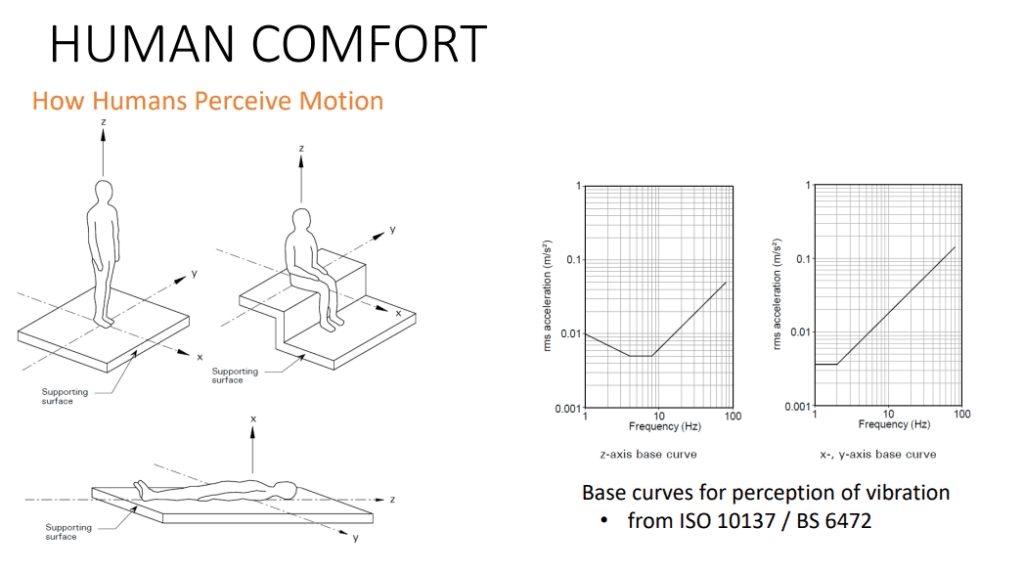
Source: Thornton Tomasetti, presented at the 25th Lab Design Anniversary Conference.
The Solution: A Connected Approach
A key takeaway from the conference is that vibration control cannot be treated as a final adjustment. Once a laboratory is built, correcting vibration issues becomes complex and costly. Instead, success depends on early stage planning, site analysis, vibration testing and close collaboration between structural engineers, architects, laboratory planners, end users, CiF Lab Solutions and our dealer partners.
While structural vibration performance is primarily addressed by the building design team, laboratory furniture and equipment support systems also play a critical role in maintaining a stable working environment.
At CiF Lab Solutions and through our network of dealer partners, we support projects by supplying laboratory casework systems that are engineered for performance as well as durability. Laboratory casework is not just cabinetry but part of the overall stability system of a laboratory.
Through rigid construction, proper anchorage detailing and dedicated equipment support solutions such as isolated instrument work surfaces, CiF and our dealer partners help support environments where vibration sensitivity is a critical consideration.
By integrating furniture planning, equipment support and installation details early in the design process, project teams can help ensure laboratories are better equipped to protect research outcomes while supporting the people who rely on them every day.
As laboratory technologies continue to advance, successful lab design depends on collaboration across all disciplines involved in the project. We are proud to support that integrated approach to creating high performance laboratory environments.