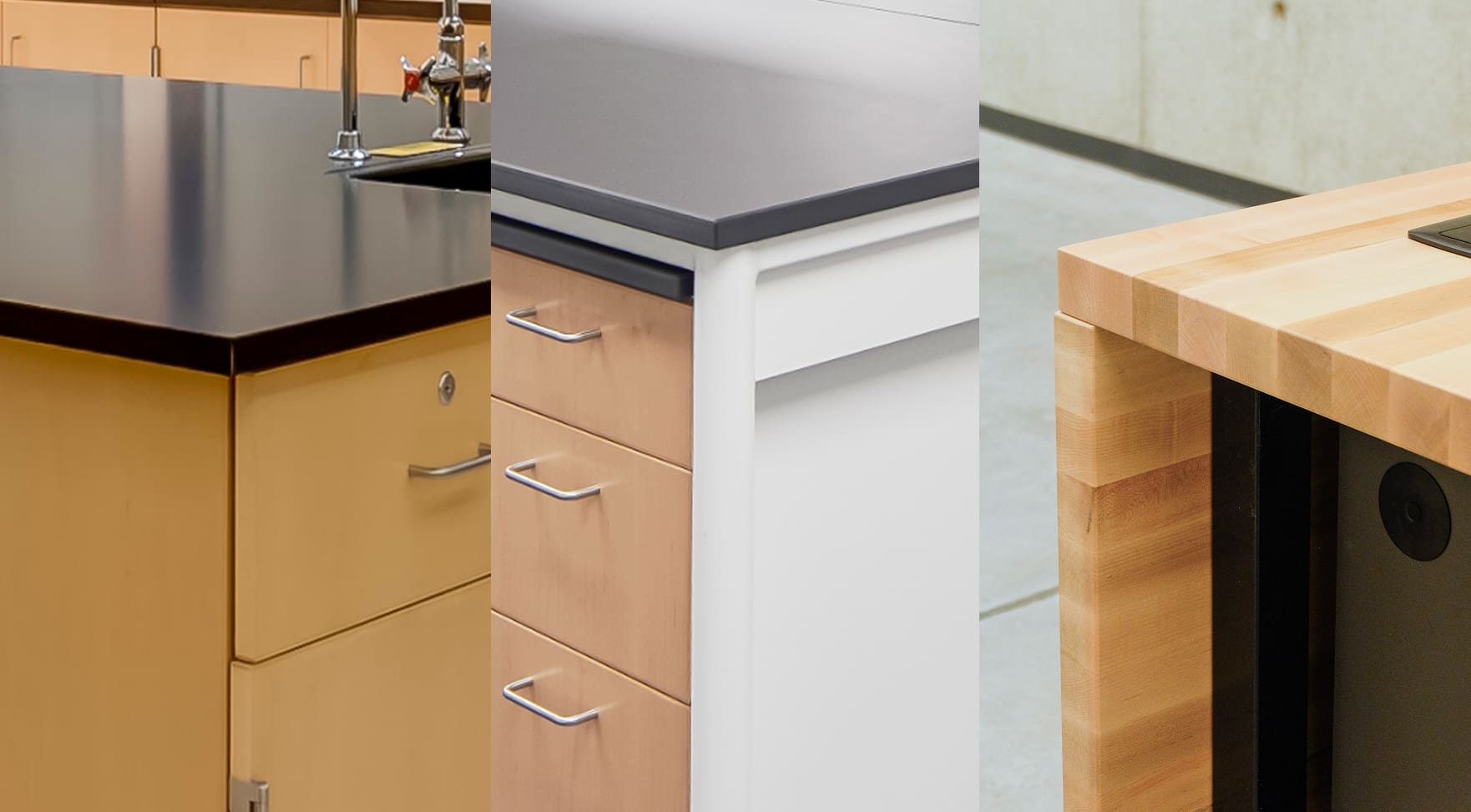
When designing a laboratory, material selection plays a critical role in long-term performance. One of the most common considerations is choosing between wood and steel casework.
Both materials are widely used across educational, research, and institutional labs. When properly specified, both can meet modern performance standards.
The key is understanding how each material performs in context.
Do Wood and Steel Casework Meet Laboratory Standards?
Yes. Both wood and steel casework can meet SEFA (Scientific Equipment and Furniture Association) standards, which evaluate resistance to:
- Chemicals
- Moisture
- Heat
- Impact
Steel casework is known for its strength and consistency, especially in high-use environments. With powder-coated finishes, it offers reliable surface protection.
Engineered wood casework, when paired with a SEFA-rated topcoat, also performs well under typical laboratory conditions. Its durability is closely tied to proper sealing and construction.
In both cases, performance depends on specification, detailing, and installation, not just the material itself.
Durability: How Do They Perform Over Time?
Durability is not only about initial strength, but how materials hold up with daily use.
Steel casework:
- Maintains structural rigidity
- Performs well in high-impact environments
- Supports consistent, easy-to-clean surfaces
Wood casework:
- Provides stable, engineered construction
- Resists daily wear when properly finished
- Maintains appearance over time without denting like metal
Both materials are designed for long-term use and require proper maintenance to sustain performance.
Design Flexibility and User Experience
Material selection also impacts how a laboratory space looks and feels.
Steel:
- Clean, uniform appearance
- Often used in highly controlled or utilitarian environments
Wood:
- Greater flexibility in finishes and textures
- Supports integration with architectural design
- Contributes to a more natural, biophilic environment
As laboratory design evolves, there is increasing emphasis on spaces that support both function and user comfort.

Key Factors When Choosing Between Wood and Steel
Selecting the right material depends on the needs of the project. Common considerations include:
- Type of laboratory application
- Flexibility and Adaptability
- Sustainability goals
- Design intent and user experience
Side-by-Side Quick Guide
Choose Steel When:
- High-impact, repetitive use environments
- Institutional or standardized lab layouts
- Preference for uniform, modular systems
- Minimal design variation required
Choose Wood When:
- Design-driven or architect-led projects
- Emphasis on biophilia and occupant well-being
- Need for customization or future adaptability
- Value placed on repairability and long-term flexibility
There is no single “best” option. The right choice is the one that aligns with how the space will be used.
Conclusion: Performance Depends on Context
Wood and steel casework are both proven solutions in laboratory environments.
When properly specified, installed, and maintained, both materials deliver reliable performance. Rather than viewing them as competing options, they should be considered as different approaches to achieving the same goal.
A well-designed laboratory is not defined by the material alone, but by how all elements work together to support performance, safety, and long-term use.