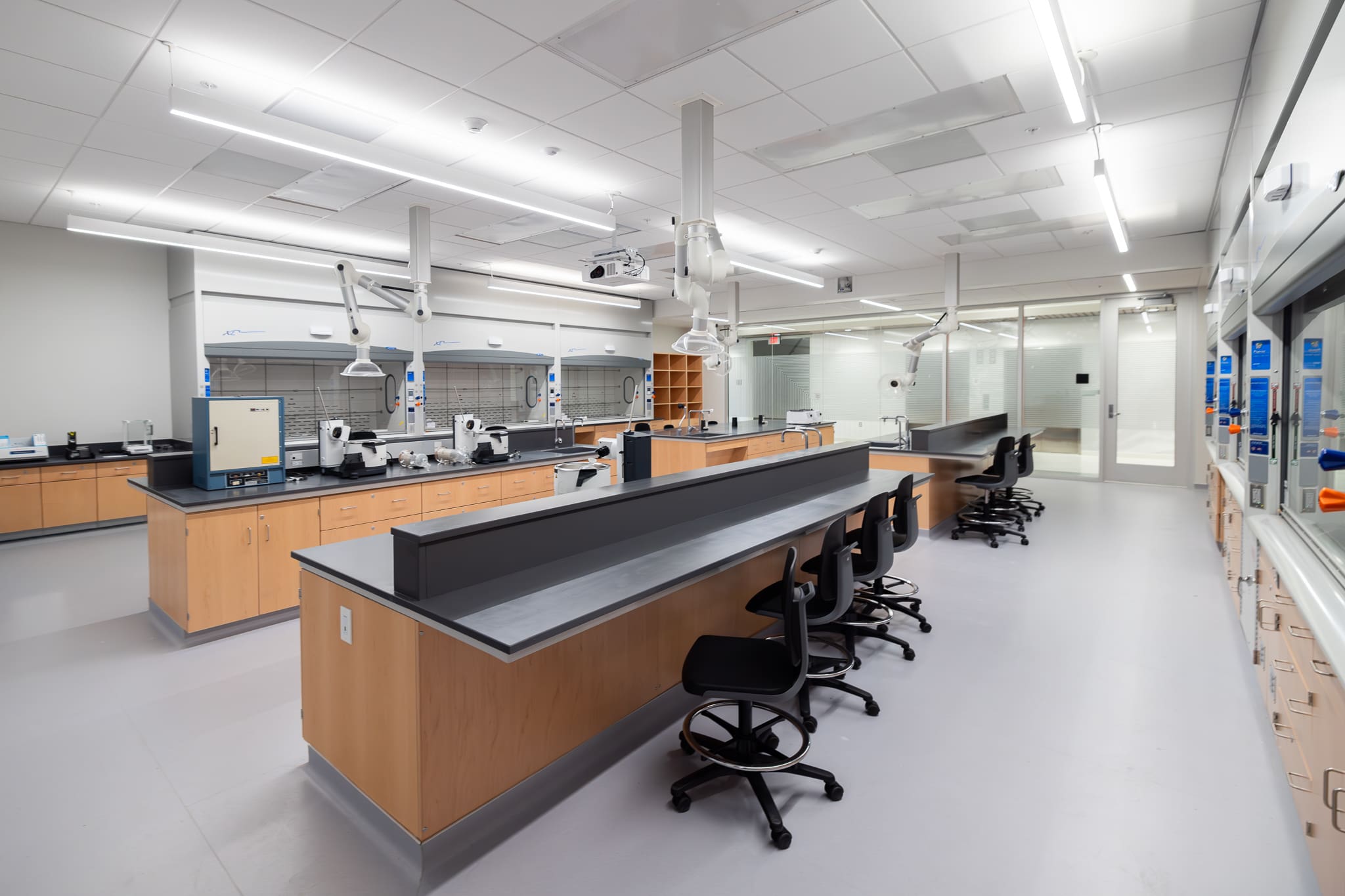
For decades, standard laboratory architecture has adhered to a rigid, unspoken rule: to be truly sterile and functional, a lab must feel like a cold, monochromatic bunker. Row after row of industrial metal cabinetry, sterile grey laminate and harsh fluorescent lighting became the default definition of a cutting-edge STEM facility.
But as modern facility planners and architects look closer at researcher retention, productivity and mental fatigue, a critical question has emerged: At what human cost does this clinical aesthetic come?
Scientists and educators routinely spend ten to twelve hours a day inside these windowless, artificial environments. The result? Accelerated burnout, spatial fatigue and diminished cognitive clarity. This is precisely why the architecture world is shifting toward biophilic design—the practice of connecting building occupants closely to nature through organic textures, natural light and authentic materials.
Yet, the moment an architect proposes introducing premium wood casework to a high-level lab environment, skeptics inevitably raise their hands. "Can wood handle heavy chemical environments?" "Will it warp under intense daily utility?" "Is it truly rugged enough for real science?"
The answers lie in rigorous engineering. It is entirely possible to fuse organic, human-centric wellness with uncompromising industrial strength.
The Hidden Psychology of Wood in STEM
Biophilic design isn't a decorative luxury; it is rooted in neuroscience. Studies continually indicate that visual contact with natural wood grain actively lowers human cortisol levels, stabilizes blood pressure and reduces autonomic nervous system stress. In a high-pressure testing or research environment, a calm researcher is a focused, precise researcher. Wood surfaces also offer acoustic damping properties that hollow steel cabinets simply cannot match, reducing the exhausting background hum of heavy mechanical laboratory equipment.
Engineering Organic Beauty to Industrial Benchmarks
To eliminate the skepticism surrounding organic materials in labs, casework must be built to the absolute peak of manufacturing engineering. This is achieved by anchoring biophilic aesthetics to world-class performance certifications:
- SEFA-8W Standard Compliance: This certification guarantees that premium wood casework satisfies the rigid testing criteria established by the Scientific Equipment and Furniture Association. It proves the cabinets survive unforgiving load limits, thousands of drawer cycles and harsh impact tests.
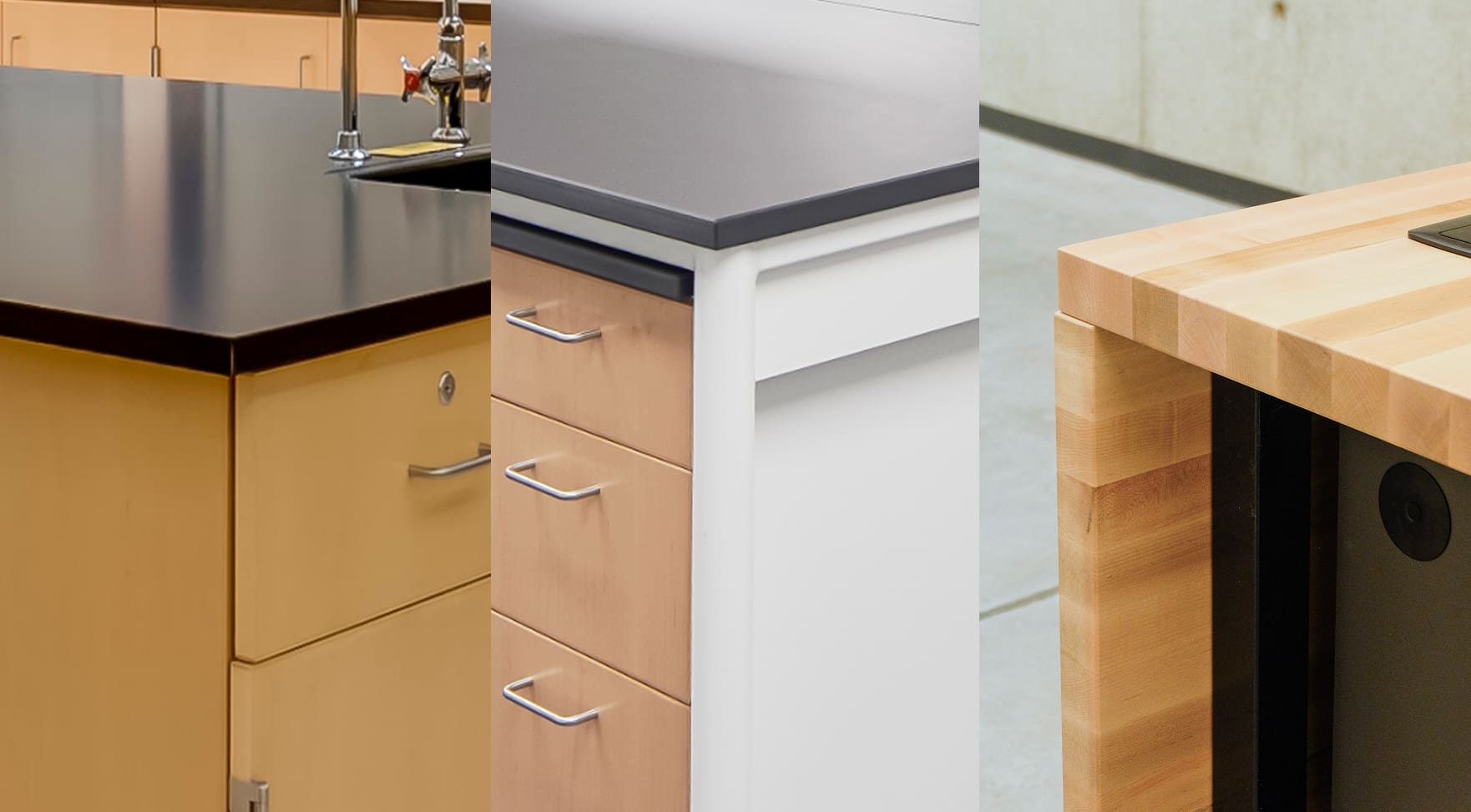
- Advanced Chemical Resistance: Modern lab-grade wood features specialized chemical-resistant barriers. Processes like CiF's water-based ColourSplash staining provide an impervious shield against aggressive chemical reagents and heavy sanitizing protocols while still letting the organic beauty of the grain shine through.
- AWI QCP Premium Grade Certification: This baseline ensures structural joinery and veneer matching hold up under variable environmental loads, ensuring decades of reliable lifespan.
Form Meets High-Performance Function
Adopting a biophilic footprint doesn't mean moving backward technically. Forward-thinking spaces seamlessly integrate premium natural casework with heavy-duty structural flexibility—such as combining rich wood facades with mobile, height-adjustable elevation tables. The result is a striking layout that satisfies safety officer demands while providing spaces where top-tier scientific talent actually wants to work, innovate and discover.