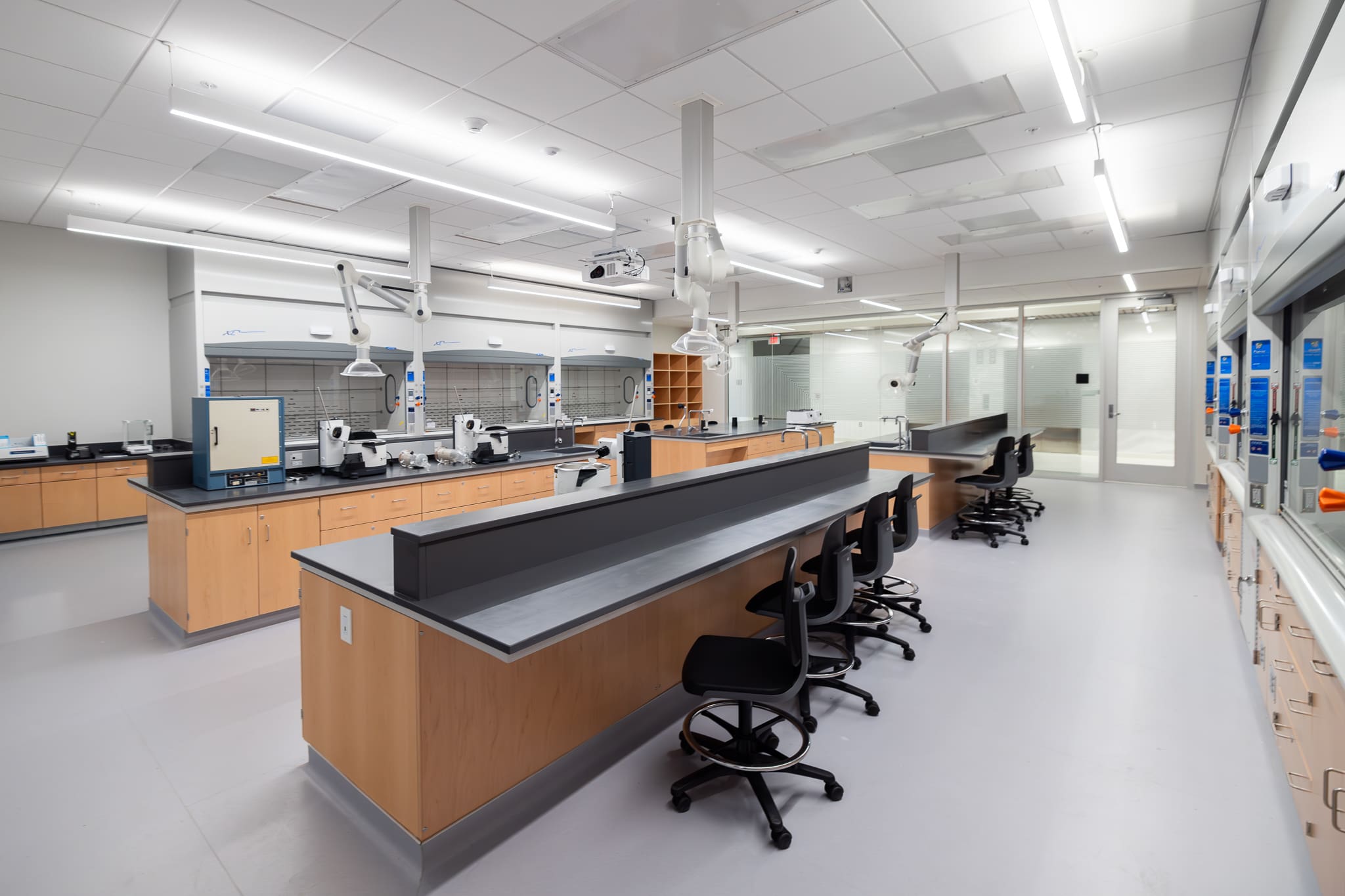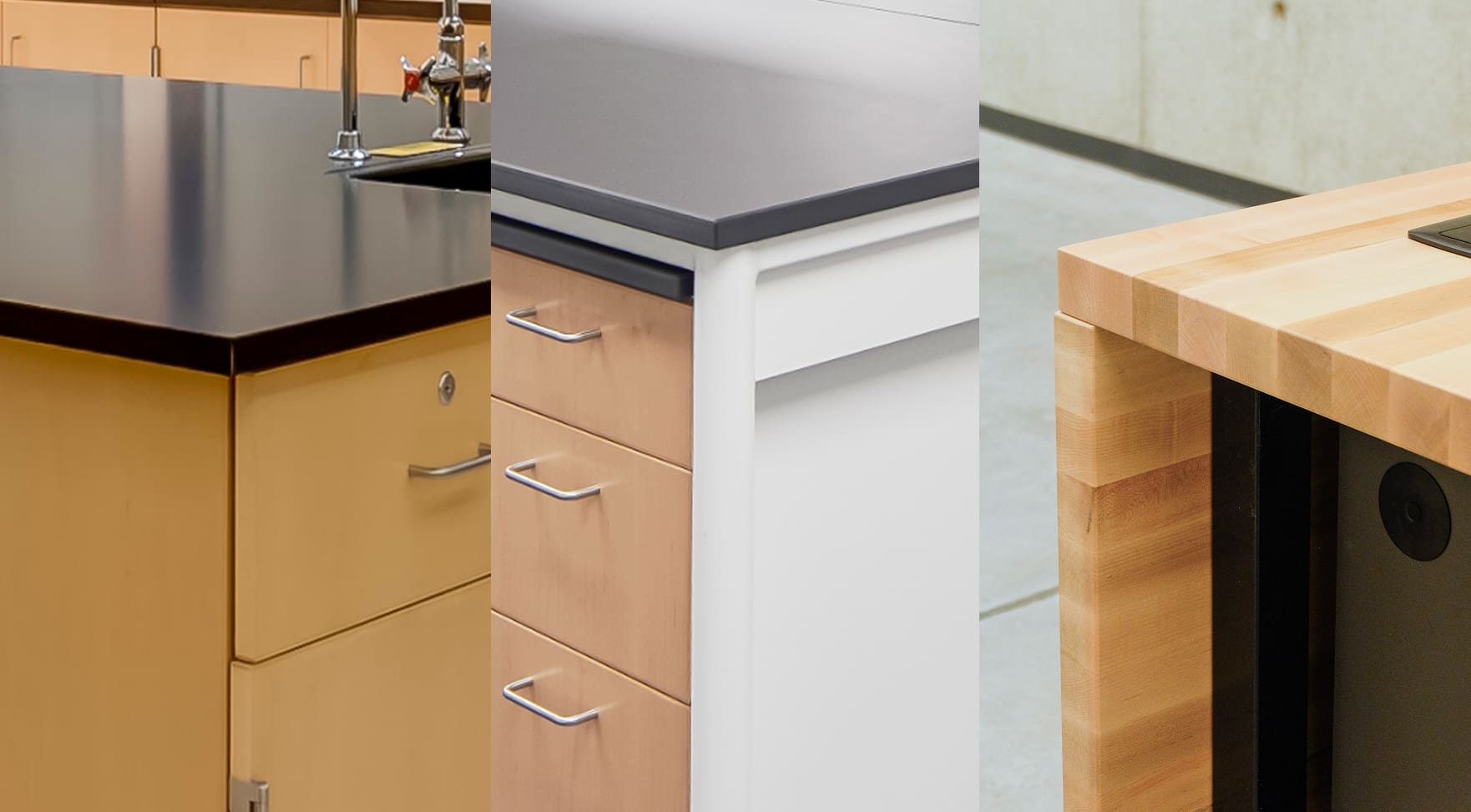
Laboratory design historically prioritized sterile, clinical efficiency, resulting in windowless, utilitarian spaces dominated by monochrome metal and stark white surfaces. Today, lab casework and spatial planning are undergoing a major shift—integrating biophilic design to support researcher well-being, mitigate cognitive fatigue and boost daily performance without compromising strict BSL compliance or decontamination standards.
Rather than viewing biophilia as a trade-off between clinical utility and aesthetic comfort, modern facilities are proving that human-centred design actively supports better science. Here is a look at how future lab casework is evolving to merge natural principles with high-tech functional design.
Key Biophilic Trends in Future Lab Casework
1. Material Warmth via Real Wood & Natural Finishes
- The Context: For decades, laboratory casework relied almost exclusively on cold, monochrome metals and sterile grey surfaces. While functional, this environmental monotony contributes significantly to visual fatigue over long shifts.
- The Evolution: Leading facilities are bringing the psychological warmth of real wood, timber veneers and high-performance wood-grain finishes directly into the lab environment. Advances in protective sealants and specialized surface treatments allow solid wood and natural timber casework to deliver the proven stress-reducing benefits of biophilia while maintaining full chemical, impact and microbial resistance.
2. Integrated Lighting & Circadian Rhythm Support
- The Context: Traditional research environments often rely on static, harsh overhead fluorescents that remain unchanged from morning to night, disrupting natural biological rhythms.
- The Evolution: Reagent shelves and upper cabinetry now feature integrated tunable white LED task lighting. These systems shift dynamically throughout the day—emitting high-Kelvin, blue-enriched light in the morning for alertness and warm, low-intensity light toward the end of a shift—mimicking natural solar cycles to support researchers' circadian health and sleep-wake patterns.
3. Flexible Layouts & Adaptable Mobile Islands
- The Context: Rigid, fixed casework rows limit spatial adaptability and force researchers into fixed physical postures, increasing physical strain and operational friction.
- The Evolution: Flexible, height-adjustable mobile bench systems and reconfigurable storage units are replacing static rows. These adaptable islands allow research teams to reconfigure their workspaces quickly as project requirements change, providing ergonomic variety and an intuitive spatial flow.
4. Human-Centered Geometry & Organic Curves
- The Context: Standard casework design heavily features sharp 90-degree corners and rigid linear arrangements that can feel uninviting and create physical bottlenecks during repetitive tasks.
- The Evolution: Casework design is increasingly incorporating softened radii, contoured work surfaces and organic configurations inspired by natural shapes. These rounded profiles reduce physical impact hazards, improve ergonomic comfort and create a more fluid, human-centred workspace.
Biophilic Casework Design Breakdown
| Feature | Traditional Lab Casework | Future Biophilic Lab Casework |
|---|---|---|
| Primary Finishes | Cold grey steel, monochrome metal | Real wood, warm timber veneers, natural textures |
| Geometry | Hard 90° edges, rigid linear layouts | Softened radii, contoured edges, flexible mobile zones |
| Task Lighting | Single-spectrum fluorescent lighting | Circadian-tuned dynamic LEDs under shelves and hoods |
| Storage & Walls | Fixed, permanent cabinet rows | Adaptable mobile islands with reconfigurable storage |
Key Design Insight: Biophilic lab casework isn't about placing potted plants next to a fume hood. It is about thoughtfully applying natural analogies—real wood textures, dynamic light and acoustic softening—to the functional surfaces of the lab, balancing strict cleanroom protocols with human-centred performance.